


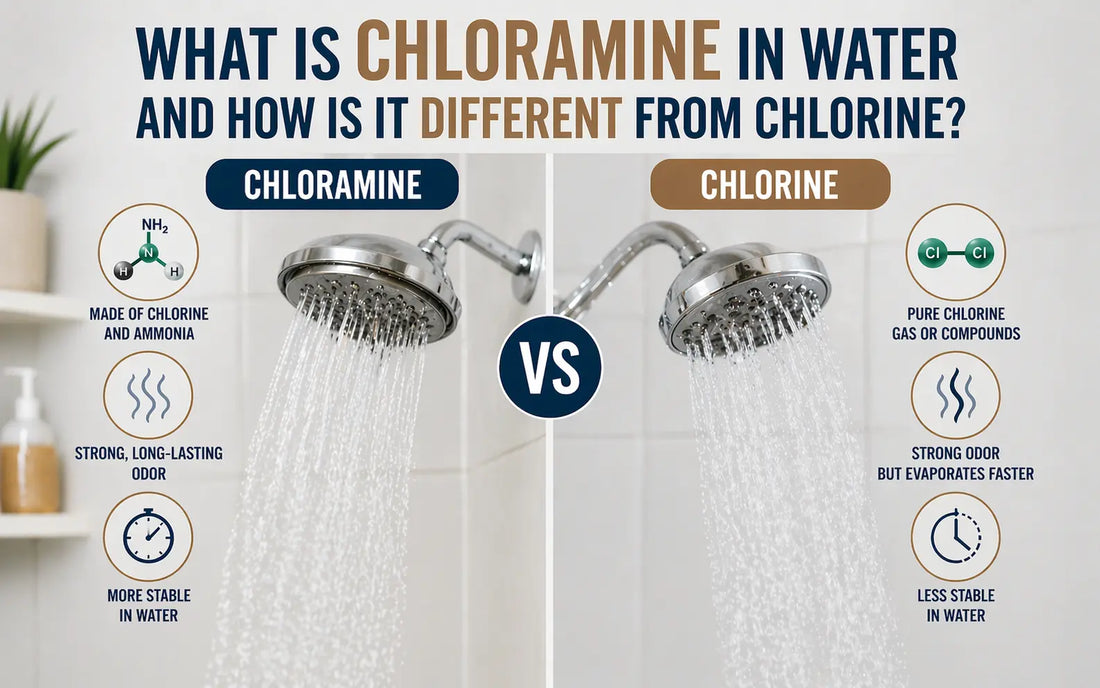
Chloramine in water is something many homeowners in the USA are exposed to daily without even realizing it. If you have noticed dryness in your skin, dull hair, or irritation after showering, your water treatment method could be playing a role. As more people explore modern shower upgrades, they are also learning how different disinfectants like chloramine and chlorine affect their daily routine.
What Is Chloramine and Why Is It Used in Water Treatment?
Chloramine is a disinfectant formed by combining chlorine with ammonia. It is widely used in municipal water systems across the United States.
Why water systems use chloramine
-
Provides longer-lasting disinfection than chlorine
-
Maintains water quality across long distribution systems
-
Produces fewer disinfection byproducts in some cases
-
Helps meet regulatory standards
Unlike chlorine, chloramine stays stable in water for a longer time, which makes it effective for large-scale water distribution.
What Is Chlorine in Water and How Does It Work?
Chlorine has been used for decades to disinfect drinking water and kill harmful bacteria.
How chlorine works
-
Quickly eliminates microorganisms
-
Breaks down contaminants
-
Evaporates faster than chloramine
While chlorine is highly effective, it tends to dissipate quickly, which is why some water systems prefer chloramine for longer-lasting protection.
Key Differences Between Chloramine and Chlorine
Understanding the difference between these two disinfectants can help you better manage your exposure.
Main differences to know
1. Stability
-
Chlorine dissipates quickly
-
Chloramine remains in water longer
2. Strength
-
Chlorine is a stronger disinfectant initially
-
Chloramine provides more consistent, long-term disinfection
3. Odor
-
Chlorine has a noticeable smell
-
Chloramine has a milder scent
4. Impact on skin and hair
-
Both can cause dryness
-
Chloramine tends to linger longer, increasing exposure
These differences influence how your water interacts with your skin and hair during daily use.
Which Is Better for Water Quality: Chloramine or Chlorine?
There is no one-size-fits-all answer. Both have benefits and drawbacks depending on how water is used.
Chlorine advantages
-
Fast-acting disinfectant
-
Easier to remove through filtration
-
Commonly used in smaller systems
Chloramine advantages
-
Longer-lasting protection
-
More stable in distribution systems
-
Reduces certain chemical byproducts
From a safety perspective, both are approved for use. However, from a personal comfort standpoint, they can affect your shower experience differently.
How Chloramine and Chlorine Affect Skin and Hair
While these disinfectants keep water safe, they can also impact your skin and hair over time.
Effects on skin
-
Dryness and tightness
-
Irritation or sensitivity
-
Reduced natural moisture
Effects on hair
-
Loss of natural oils
-
Increased dryness and brittleness
-
Dull appearance
Chloramine in water can be more persistent, meaning it stays in contact with your skin and hair longer during showers.
How to Reduce Exposure to Chloramine and Chlorine in Shower Water
You do not have to completely change your water system to reduce exposure. Small adjustments can make a noticeable difference.
Practical ways to improve your shower experience
1. Install a shower filter
Filters designed for both chlorine and chloramine can help reduce their presence.
2. Use lukewarm water
Hot water can intensify dryness and irritation.
3. Limit shower time
Shorter showers reduce prolonged exposure.
4. Upgrade your shower setup
Many homeowners investing in frameless shower doors and bathroom upgrades also improve water quality for better skin and hair health.
5. Maintain a clean shower environment
A well-maintained shower reduces buildup and enhances overall comfort.
Why Your Shower Environment Matters More Than You Think
Your shower is part of your daily routine, and the quality of that experience depends on more than just water flow. The type of water treatment, combined with your shower setup, can influence how your skin and hair respond over time.
Upgrading your bathroom with solutions from Shower Envy allows you to create a cleaner, more efficient space. When paired with better water practices, it can help reduce the effects of chloramine in water and chlorine exposure.
Understanding Your Water Makes a Difference
Chloramine in water and chlorine both play important roles in keeping your water safe, but they can also affect your daily comfort. From dryness and irritation to changes in hair texture, the impact builds over time.
The key is awareness and action. By understanding the differences and making small improvements to your shower routine and setup, you can reduce exposure and create a more comfortable experience.
Start taking steps today to manage chloramine in water and enjoy a better, more refreshing shower every day.
FAQs
1. What is chloramine in water?
Chloramine is a disinfectant made by combining chlorine and ammonia, used to keep water safe over longer distances.
2. Is chloramine safer than chlorine?
Both are considered safe for use, but chloramine lasts longer in water, which may increase exposure during daily use.
3. What is the main difference between chloramine and chlorine?
Chlorine acts quickly and dissipates fast, while chloramine is more stable and remains in water longer.
4. Does chloramine affect skin and hair?
Yes, it can cause dryness and irritation, especially with prolonged exposure.
5. Can a shower filter remove chloramine?
Some advanced filters can reduce chloramine, though not all standard filters are effective against it.
6. Why do water systems use chloramine instead of chlorine?
Chloramine provides longer-lasting disinfection and helps maintain water quality across large distribution systems.